Next-Gen AI: Transforming Modern Industries
Innovation, Industry Transformation
Spotlight: How Next‑Gen AI Services Are Quietly Reshaping Entire Industries
From retail and manufacturing to automotive and consumer tech, AI‑powered products and services are no longer side projects—they are becoming the operating system of modern industries. Here’s how this new wave of intelligent solutions is changing the rules for everyone.
From Tools to Teammates: AI Becomes a Core Industry Partner
A defining shift in 2026 is that AI products and services are no longer marketed as isolated “features.” They are emerging as always‑on digital teammates that sit inside everyday workflows and make real‑time decisions. In retail, for example, platforms like Sprinklr’s Unified‑CXM are rolling out AI agents that autonomously resolve customer issues and surface insights from millions of interactions, helping brands react faster and more personally across channels (Nasdaq, 2026).
In e‑commerce, Constructor’s AI search and product discovery service powered 322 billion shopping interactions in a single fiscal year, with customer growth of 82% and revenue retention of 96% (PR Newswire, 2026). These numbers show how AI is moving from “nice‑to‑have” to mission‑critical infrastructure for digital revenue.
Reinventing the Customer Journey: Frictionless, Agent‑Led Commerce
Perhaps the clearest sign of industry change is how buying itself is being redesigned. Google’s new Universal Commerce Protocol (UCP) lets shoppers move from discovery to checkout entirely through AI agents in Search or Gemini, paying with Google Pay or PayPal without ever visiting a traditional storefront (TechCrunch, 2026). Retailers can deploy branded “Business Agents” that negotiate, answer questions, and complete transactions on the customer’s behalf.
SAP is pushing this further with agentic commerce: making physical stores machine‑readable, connecting digital shelves with AI‑native demand planning, and using shopping agents to optimize everything from promotions to post‑purchase service (SAP News, 2026). The result is a customer journey that feels seamless to shoppers yet is orchestrated behind the scenes by a mesh of intelligent services.
Operational Excellence Becomes the New Growth Strategy
Across manufacturing and consumer packaged goods, the most successful companies are using AI products and services to grow by getting smarter, not just bigger. A 2026 report on CPG trends found that manufacturers adopting AI are 2.6 times more likely to expect 20%+ revenue growth, while those investing in new production lines are 2.1 times more likely to hit that same threshold (PR Newswire, 2026).
Supply‑chain platforms like Blue Yonder and RELEX are embedding AI agents directly into planning and fulfillment. According to RELEX, 67% of retail and manufacturing leaders now feel confident using AI in decision‑making, with nearly half already applying it to inventory optimization and logistics (PR Newswire, 2026). These services turn volatile demand and complex routing into manageable, even predictable, operations—cutting waste, reducing stockouts, and improving margins.
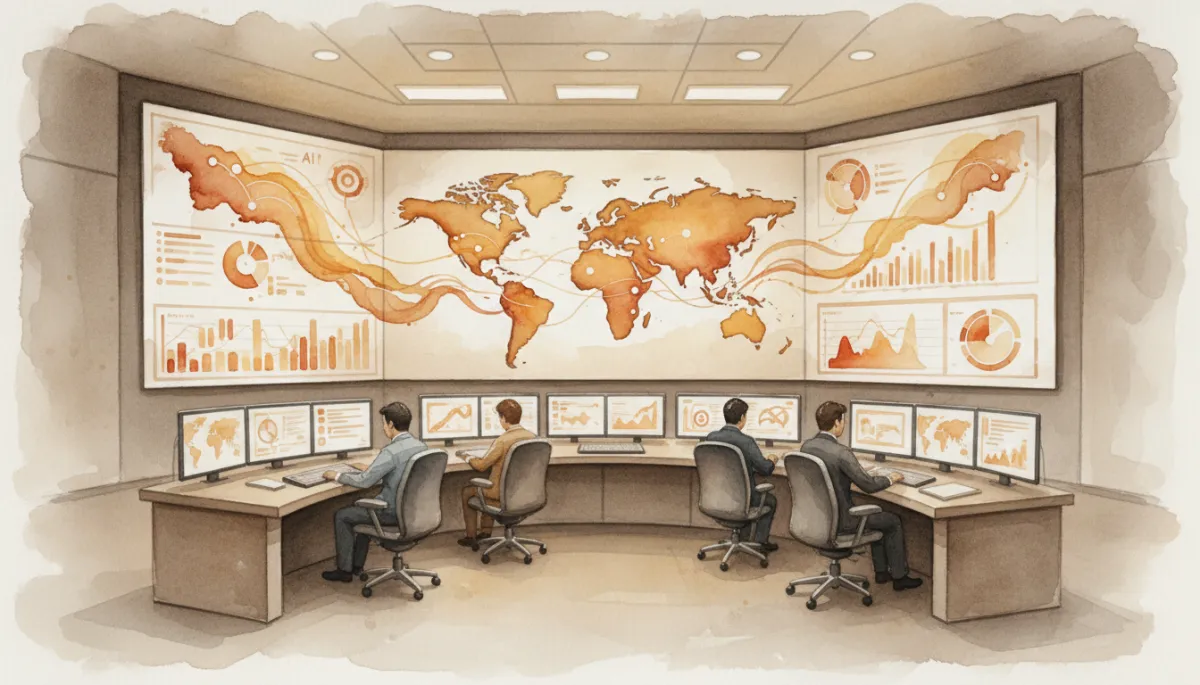
AI‑driven planning tools turn volatile demand into data‑driven, confident decisions.
Beyond the Office: AI Services in Cars, Homes, and Devices
The impact of these products and services isn’t confined to back offices and boardrooms. In automotive, Garmin’s Unified Cabin 2026 introduces a conversational, multilingual AI assistant that understands multiple requests at once—like “start a movie for the kids and share my screen”—and intelligently routes audio and visuals to the right seat (PR Newswire, 2026). This turns the vehicle into a personalized, software‑defined environment rather than a static machine.
Consumer tech is following the same pattern. From LG’s ultra‑thin Wallpaper TV to smart play experiences like Lego Star Wars sets that react with sound and sensors, products are blending hardware with intelligence to create living services that evolve over time (T3, 2026). The line between “device” and “service” is steadily disappearing.
What This Transformation Means for Every Business
Put simply, AI‑powered products and services are changing the industry by redefining what “good” looks like. Customers now expect personalization, instant answers, and effortless journeys. Operations teams expect predictive, automated decision‑making. Leaders expect real‑time visibility and scenario planning, not static reports.
By 2026, organizations that treat AI as a bolt‑on feature will struggle to keep up with competitors that treat it as a productized service woven into every interaction, process, and experience. The spotlight is clear: the future industry leaders are building around AI‑native products and services today—turning intelligence into their most powerful competitive advantage.
